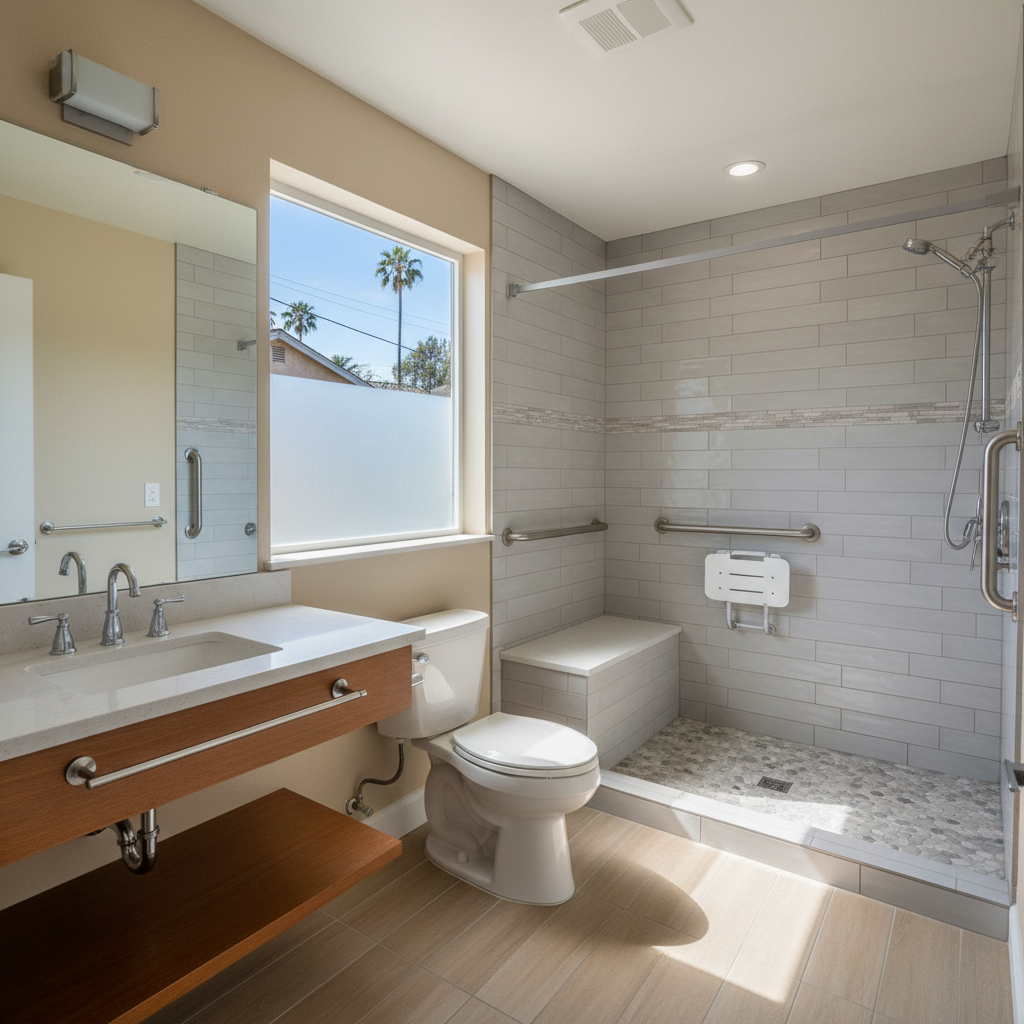
Thinking about making your bathroom more accessible? That's a smart move, whether it's for yourself, a family member, or just future-proofing your home. But let me tell you, I've seen a lot of folks in Downey make some pretty common, and often expensive, mistakes when they're planning or hiring for these projects. You don't want to be one of them.
Mistake #1: Not Really Understanding "Accessible"
This is probably the biggest one. People hear "accessible" and they think grab bars and a roll-in shower. And sure, those are part of it, but it's way more comprehensive than that. You need to think about the entire flow of the space. Is the doorway wide enough for a wheelchair or walker? We're talking at least 32 inches clear opening, preferably 36. Can someone easily get to the toilet, sink, and shower without banging into things? Are the controls easy to reach and operate with limited dexterity? I've seen bathrooms where the shower is technically roll-in, but the toilet is tucked into a corner where no one in a chair could ever get to it comfortably. That's not accessible; that's just a shower.
You've got to consider turning radius too. A 60-inch diameter clear floor space is the general guideline for a wheelchair to turn around. Many older Downey homes, especially those built in the 50s and 60s with their smaller, compartmentalized bathrooms, just don't have that kind of space without a significant reconfigure. Don't just slap on some grab bars and call it a day. Think about the whole picture.
Mistake #2: Hiring the Wrong Contractor (or DIYing it)
Look, I get it. Everyone wants to save a buck. But an accessible bathroom isn't just a cosmetic update. It's about safety and functionality. This isn't the time to hire your buddy's cousin who does "handyman work" or try to tackle it all yourself if you're not experienced. I've seen shoddy grab bar installations that pull right out of the wall because they weren't anchored into studs or proper blocking. Imagine the injury that could cause.
You need a contractor who specifically understands ADA guidelines (even if you're not building to full commercial ADA, these are excellent benchmarks for residential safety) and has experience with accessible design. Ask for references, specifically for accessible projects. Look at their past work. Do they talk about things like blocking for future grab bars, slip-resistant flooring, proper shower pan slopes, and faucet types? If they just talk about tile colors, that's a red flag. At Downey Custom Bathrooms, we make sure we're asking all these questions upfront.
Mistake #3: Forgetting About the Details (and Future Needs)
It's easy to focus on the big stuff, but the small details make a huge difference. Think about the height of the toilet – comfort height is usually better. The type of faucet – lever handles are much easier to operate than knobs. Shower heads that are handheld and adjustable. Non-slip flooring is a must, especially in our humid Southern California climate where things can get slick fast. Even things like towel bar placement – can they be reached from a seated position?
And don't forget about future needs. Maybe you only need a few modifications now, but what if mobility decreases further down the line? It's often more cost-effective to plan for potential future needs during the initial renovation than to have to tear things up again later. For example, reinforcing walls for grab bars that aren't installed yet is a smart, inexpensive step during framing.
Mistake #4: Not Considering Funding or Permits
Some accessible modifications might qualify for grants or tax deductions, especially if it's for medical necessity. Don't assume you have to pay for everything out of pocket without checking. Organizations for veterans or specific disabilities often have resources. Also, for any significant structural changes, plumbing, or electrical work, you're going to need permits from the City of Downey. Skipping permits might seem like a shortcut, but it can lead to big headaches down the road if the work isn't up to code, or when you go to sell your house. A reputable contractor will handle the permitting process for you.
Making your bathroom accessible is a fantastic investment in comfort, safety, and independence. Just make sure you're doing it right the first time. It'll save you a lot of grief and money in the long run.