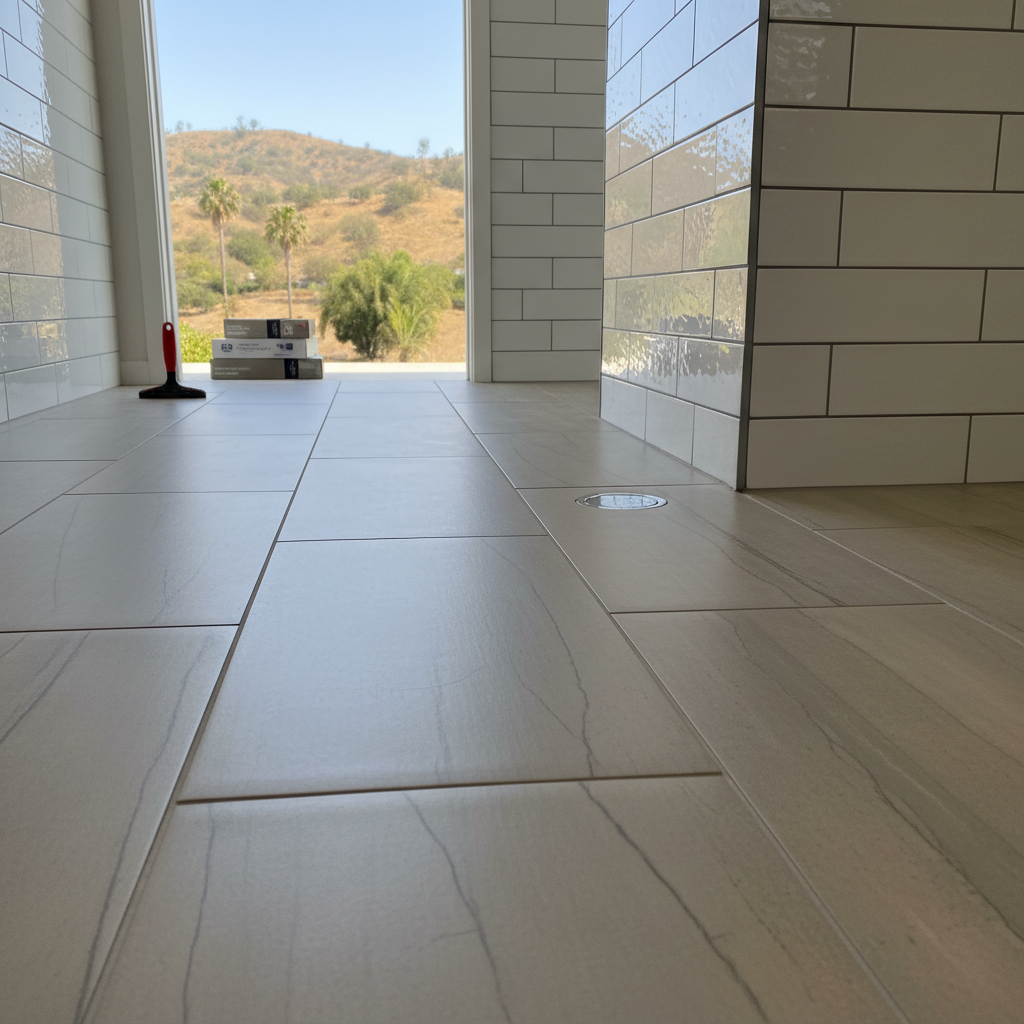
Alright, let's talk tile and flooring. As a local contractor, I hear the same questions all the time from folks right here in Downey, whether they're just looking to spruce up a bathroom or redo their whole house. It's a big investment, after all, and you really want to get it right. So, I've put together some straightforward answers to the questions I get asked most often. No fluff, just the real deal.
So, how long does a tile or flooring installation *actually* take?
This is probably the number one question I get, hands down. And honestly, it really varies quite a bit. For an average-sized room, like a bathroom or a kitchen, laying a tile floor can take anywhere from 2 to 5 days. That covers all the prep work, getting the tile down, and then grouting it. If you're just doing a small backsplash, it might be quicker—maybe 1-2 days. A bigger kitchen floor could easily be 4-6 days, and if you're tackling a full bathroom, walls and all, you're looking at about 7-10 days.
Here's the thing, though: a big chunk of that time isn't just us laying tile. It's the drying and curing times for the thinset and grout. Thinset, the adhesive that holds the tiles in place, needs a good 24 to 48 hours to set properly. Then the grout needs its own time to dry, usually another 24 hours. You absolutely can't rush these steps, or you'll just end up with problems down the road. Patience, my friend, is key for a floor that truly lasts.
What goes into the cost of tile and flooring installation?
Another big one, right? Everyone wants to know the bottom line. The cost isn't just about the tile itself; it's a mix of a few different things:
- Material Costs: This is the obvious part. Ceramic and porcelain are usually more budget-friendly, while natural stone or those fancy glass tiles will be pricier. You can find porcelain tile for as little as $2 per square foot, but natural stone can easily climb up to $45 per square foot.
- Labor: This is where the skill comes in. Labor costs for standard tile installation typically run from $5-$15 per square foot. But if you've got intricate patterns, tiny tiles, or tricky cuts around things like a curved shower pan, that labor cost can definitely go up.
- Subfloor Preparation: This is HUGE. Seriously. If your subfloor isn't clean, level, and structurally sound, you're just asking for trouble. We might need to fix cracks, level out uneven spots, or put down an underlayment like cement board. This prep work adds to the cost, sure, but it's non-negotiable for an installation that will hold up.
- Additional Materials: Don't forget the grout, thinset, sealants, and spacers. These can add up to about $6 per square foot.
All in all, a small project might only be a few hundred bucks, but a large, complex job could easily run into several thousand.
How important is subfloor preparation for tile?
Look, if there's one thing I can't stress enough, it's this: the surface *under* your tile is just as important as the tile itself. You could pick the most expensive, beautiful tile in the world, but if the subfloor isn't prepped right, it's all going to fall apart. We're talking cracked tiles, uneven edges, loose spots, and even unseen water damage. The subfloor needs to be clean, dry, smooth, and perfectly level. If it's concrete, we'll check for moisture and make sure it's properly prepped. If it's wood, we'll check for stability and make sure there's no flex.
Skipping proper subfloor prep is like building a house on sand. It might look good for a bit, but it just won't last. Any good contractor, like us at Downey Custom Bathrooms, will tell you that straight up.
What kind of flooring holds up best in Downey's climate?
Ah, the Southern California climate. We get those long stretches of dry heat, big day-to-night temperature swings, and a lot of homes built on concrete slabs. You really need flooring that can handle all that without shrinking, expanding, or cracking. Here's what I've seen work well:
- Porcelain Tile: It's practically bulletproof against heat and moisture. Plus, it stays cool underfoot, which is a real perk during our hot summers. It's also great for resisting earthquakes, which is something we always have to consider around here, isn't it?
- Luxury Vinyl Plank (LVP): This stuff is fantastic. It's waterproof, super stable, and doesn't care one bit about humidity swings. It's a low-worry choice for busy families, pets, or any room that sees a lot of water.
- Engineered Hardwood: If you love the look of wood, engineered hardwood is a solid choice for our climate, especially if your home is on a slab. It's more dimensionally stable than solid wood, so it handles our dry heat and temperature changes much better.
Solid hardwood can work, especially on raised foundations, but you need to be more careful with it in our dry air.
How do I maintain my new tile and grout to keep it looking good?
Once you've got beautiful new tile, you want to keep it that way, right? Regular cleaning is your best defense. Sweep or vacuum often to get rid of dirt that can scratch tiles and get stuck in the grout. Wipe up spills immediately, especially on grout, because it's porous and can stain easily.
For cleaning, a mild detergent and a soft-bristled brush for the grout lines usually does the trick. Avoid harsh chemicals or abrasive scrubbers, as they can damage the grout. And here's a pro tip: seal your grout every 1-2 years. This really helps prevent staining and protects it from water. Remember, no cement-based grout is truly self-cleaning or completely stain-resistant, so a little regular effort goes a long way.
What should I ask a contractor before hiring them for a tile or flooring job?
You're smart to ask this. Hiring the right person really does make all the difference. Here are a few things I'd recommend asking:
- Experience: How long have they been installing tile or flooring? Have they worked with the specific type of material you've chosen? Different tiles, you see, require different techniques.
- Licensing and Insurance: Always, always ask for proof of current licensing and insurance. This protects *you* if something goes wrong.
- Subfloor Prep: Ask them specifically how they handle subfloor preparation. Do they inspect it thoroughly? Will they fix cracks, moisture issues, or uneven areas? A good answer here tells you they really know what they're doing.
- Detailed Estimate: Get a written estimate that breaks down everything: material costs, labor, subfloor prep, and any extra materials like grout and sealant. You definitely don't want any surprises.
- Timeline: Get a realistic timeline for the project, including all those crucial drying and curing times.
Don't be shy about asking these questions. Any reputable contractor, like us at Downey Custom Bathrooms, will be happy to answer them and show you examples of our work. It's your home, after all, and you deserve to feel confident in who you hire.